Why Energy Efficiency Matters in CI/CD Pipelines
CI/CD pipelines waste energy and money; optimise triggers, images, caching and scheduling to cut carbon emissions and cloud costs.
Read moreBlog posts in the Cloud Optimization category

CI/CD pipelines waste energy and money; optimise triggers, images, caching and scheduling to cut carbon emissions and cloud costs.
Read more
Practical steps to find and manage idle cloud resources — tagging, monitoring, automation and audits to reduce waste and lower cloud costs.
Read more
Save 25–40% on Kubernetes cloud spend with KEDA: event-driven autoscaling that scales to zero, integrates with HPA and cluster autoscalers to cut idle costs.
Read more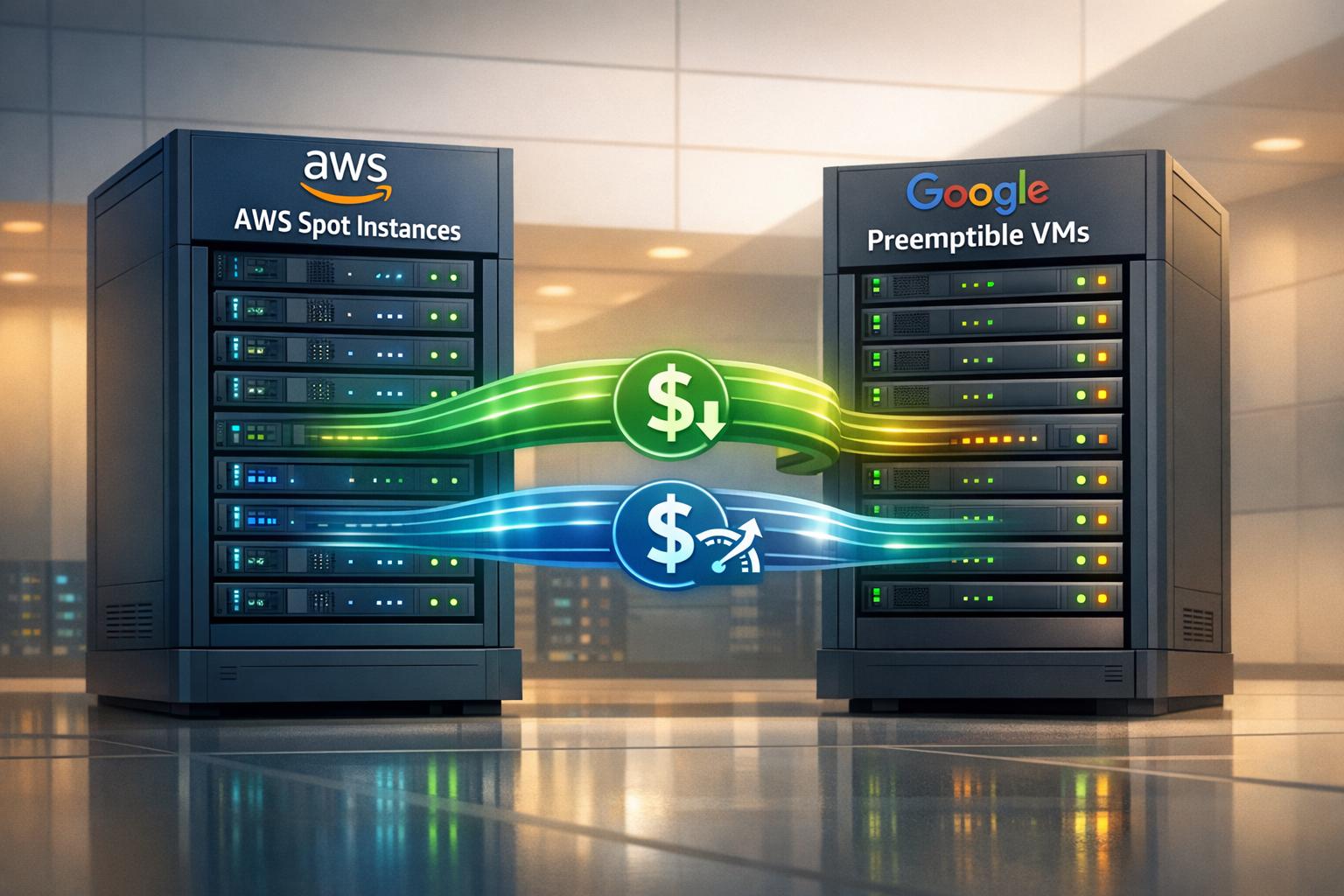
Compare AWS Spot Instances and Google Preemptible VMs: discounts, runtime limits, pricing and interruption risks to choose the best low-cost compute option.
Read more
Practical steps to cut energy use in hybrid cloud: audit resources, right-size workloads, use efficient hardware and cooling, and automate monitoring and scaling.
Read more
Compare the top 5 DNS providers by resolution speed, coverage and security to pick the best DNS for gaming, streaming and low-latency browsing.
Read more
How multi‑region elasticity affects data consistency, replication choices, compliance (GDPR), cost trade-offs and monitoring for resilient cloud systems.
Read more
Monitor vCPU, memory and I/O, use automation and tagging to rightsize cloud workloads and cut costs by 30–50% while maintaining performance.
Read more
Use impact analysis to map dependencies, focus testing, and cut post-release defects and rework—improving speed, reliability and reducing downtime costs.
Read more
Compare Kubernetes cost allocation and chargeback: visibility vs internal billing, when to use each, tagging best practices and implementation tips.
Read more
Practical steps to lower CDN egress: aggressive caching, Brotli/WebP compression, multi‑CDN routing, regional optimisation and moving static assets to CDN storage.
Read more
How Spot Instances can cut cloud bills by up to 90% — ideal for stateless, fault‑tolerant workloads; learn interruption risks, pricing differences and best practices.
Read more