5 Factors for Multi-Region Scaling Costs
Multi-region cloud setups can cost 2–3× single-region: focus on data transfer, regional pricing, redundancy, tooling and autoscaling.
Read moreBlog posts in the Cloud Optimization category

Multi-region cloud setups can cost 2–3× single-region: focus on data transfer, regional pricing, redundancy, tooling and autoscaling.
Read more
Compare seven cloud cost management tools, common setup pitfalls and integration checks to cut waste and align finance with engineering.
Read more
Match TTLs to content: long for versioned assets, short micro-caches for bursty APIs to reduce origin egress, compute and DB costs.
Read more
Compare autoscaling strategies—conservative, headroom, spot, bin-packing and multi-pool—to balance cloud cost and p95 latency.
Read more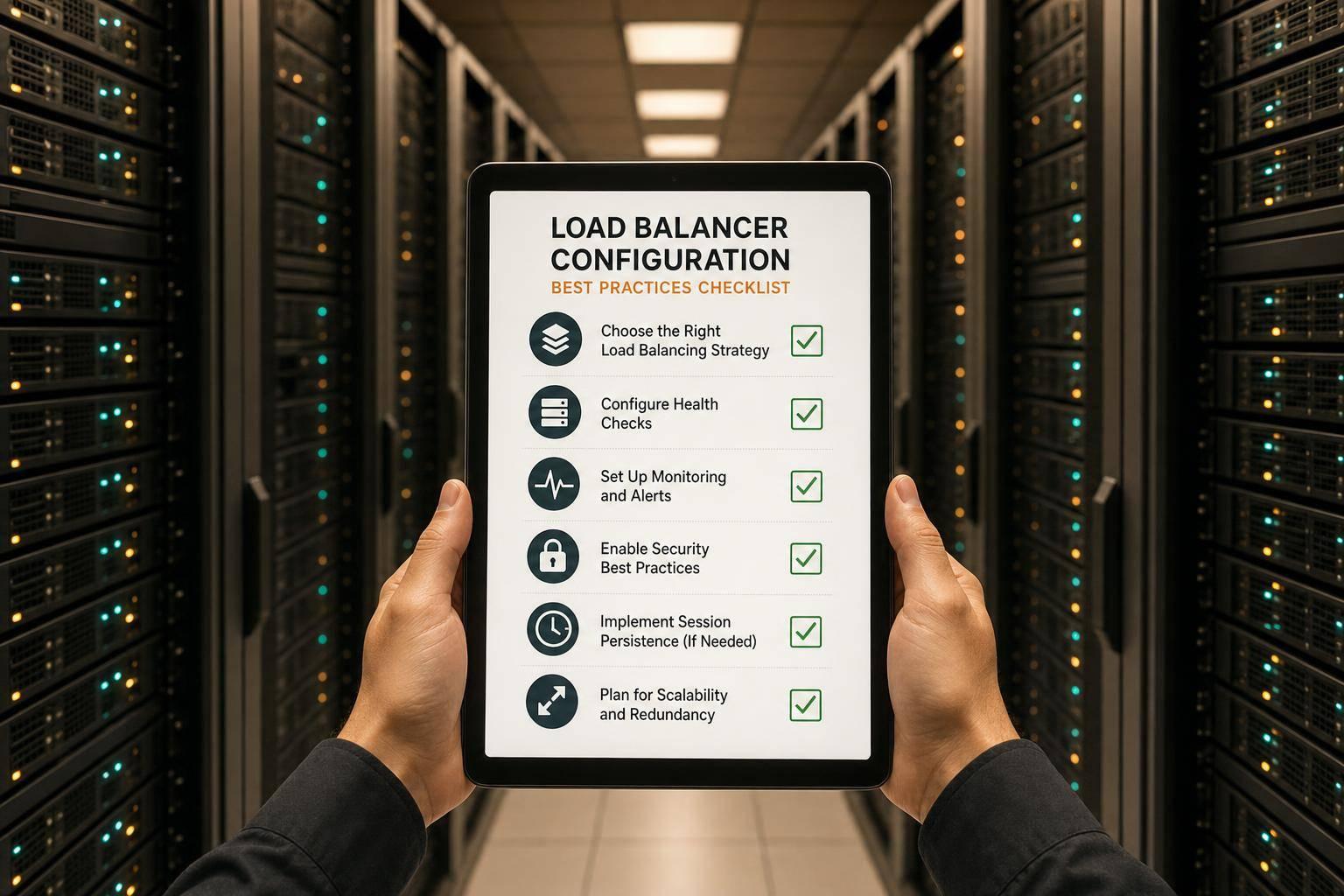
Practical checklist to configure resilient, secure load balancers: layer choice, backends, health checks, TLS, timeouts and failover.
Read more
Make multi‑cloud cost control repeatable: use IaC to enforce sizing, tagging, schedules and policy-as-code to cut wasted cloud spend.
Read more
Automate validation, image updates, drift reconciliation and policy checks to keep GitOps repos clean, low-risk and easy to maintain.
Read more
Set proper min/max capacity, use baked AMIs, choose workload metrics, enable 1‑minute monitoring and tune warmup for steady Auto Scaling.
Read more
Align access with cost ownership, protect tags and budgets, enforce separation of duties and run regular audits to reduce cloud waste.
Read more
AI-driven schedulers can cut hybrid cloud cost, latency and energy; pilot them with guardrails to manage drift, overhead and compliance risk.
Read more
Tune serverless memory and timeouts from production metrics; test 2-3 tiers to minimise cost per invocation while meeting p95/p99 latency.
Read more
If one fault can stop traffic, it's a design issue—align hybrid cloud topology to RTO/RPO with dual paths, auto failover and matched security.
Read more