AI Agent Recovery: Replay and Duplicate Tool Actions
Save action IDs, reuse idempotency keys, limit retries and reconcile unknown outcomes to prevent duplicate payments.
Read more
Save action IDs, reuse idempotency keys, limit retries and reconcile unknown outcomes to prevent duplicate payments.
Read more
Benchmark image-classification backdoors with repeatable tests measuring ASR, clean accuracy and compute cost across attacks and defences.
Read more
Seven RDMA checks to verify device registration, pod access, GPU–NIC/NUMA locality, runtime access, connectivity and transfer performance.
Read more
Speculative tool calls save latency only when slow, predictable reads outweigh wasted work—pilot read‑only tests and measure accuracy and cost.
Read more
Compare orchestration vs choreography for AI agent sagas: control, recovery ownership, idempotency, tracing and support‑cost trade‑offs.
Read more
How agents store, select and test reusable task lessons while enforcing tenant isolation, token budgets and validation.
Read more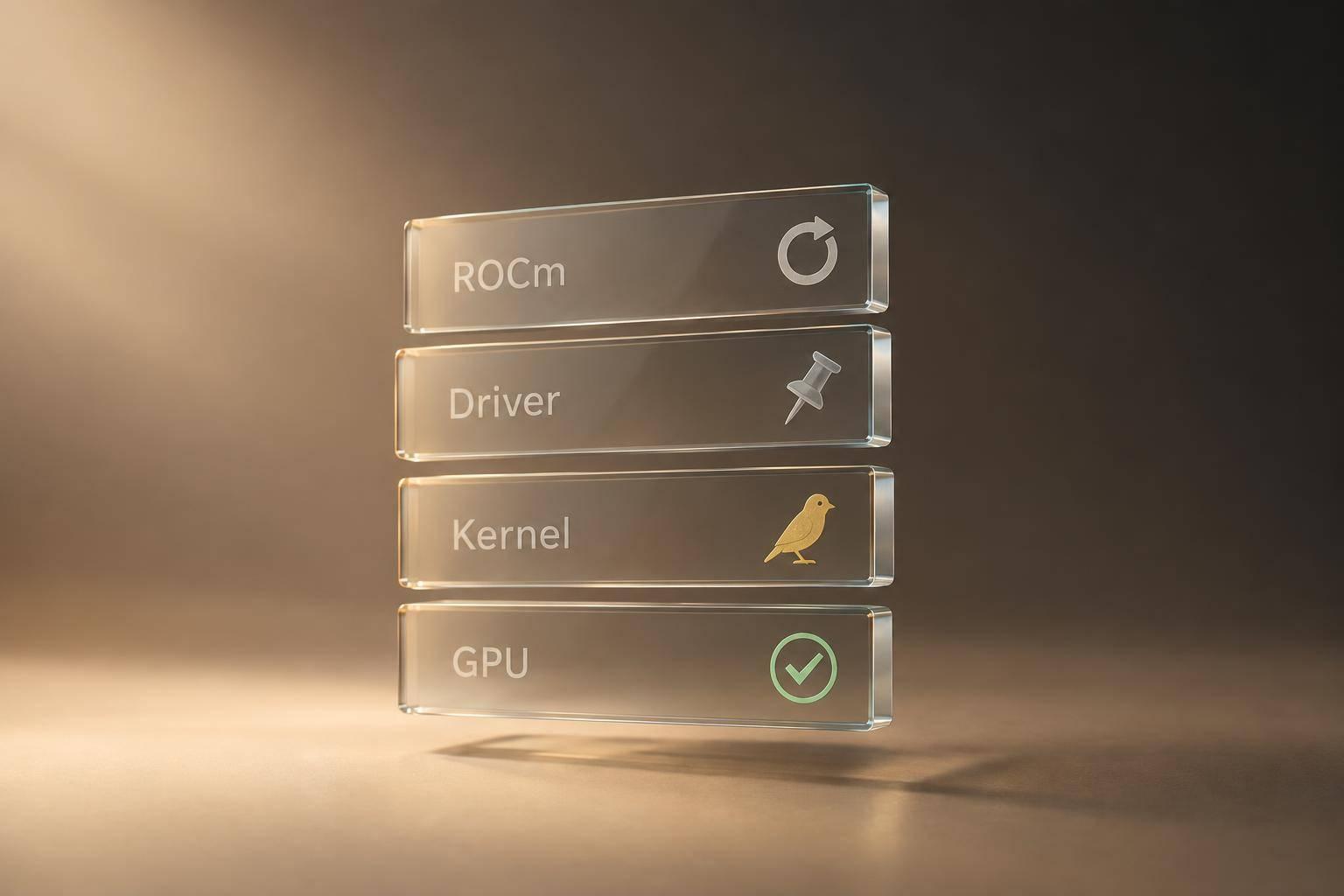
Whole‑stack ROCm upgrade checklist: verify GPU/kernel/driver compatibility, run canaries, pin versions and rehearse rollback.
Read more
What agent state teams should persist for safe restarts: recovery records, approvals, idempotency, secure retention and restore testing.
Read more
Plan VRAM for 7B–70B LLM fine-tuning: compare full fine-tuning, LoRA and QLoRA, test peak allocations and budget headroom.
Read more
AI purchases must pass mandatory security checks for access, data use, encryption, logging, incident response and enforceable exit rights.
Read more
Headline caps can mislead: test fixed, fee-based and risk-specific AI agent limits against recoverable losses, exclusions and supplier ability to pay.
Read more
15 self-questioning prompts to verify RAG sources: map claims to passages, check conflicts and decide to answer, qualify, retrieve or abstain.
Read more