Service Mesh Multi-Tenancy Patterns Explained
Namespace, vCluster or separate clusters — choose the service-mesh multi-tenancy pattern that balances cost, security and compliance.
Read more
Namespace, vCluster or separate clusters — choose the service-mesh multi-tenancy pattern that balances cost, security and compliance.
Read more
Practical strategies to reduce latency across AWS, Azure and GCP: region choice, private links, monitoring, routing and caching.
Read more
Use GitOps plus workflow orchestration to deploy and govern multiple Kubernetes clusters, ensure compliance and cut cloud costs.
Read more
Practical guide to allocating shared cloud costs: define cost objects, pick allocation drivers, choose usage/fixed/hybrid models and start with showback.
Read more
Static RBAC is unsafe for agentic cloud systems — AI enforces per-request, context-aware access with short-lived capability tokens.
Read more
Five steps to align cloud spending with UK accounting and regulations: tagging, allocation, automation, reporting and governance.
Read more
Keep core microservice functions running during failures using circuit breakers, fallbacks, timeouts, bulkheads and async workflows.
Read more
Use driver-based models, unit economics and TCO to reduce cloud forecast variance and align costs with business metrics.
Read more
Use namespace design, quotas, labels and automation to improve cost visibility, right-size resources and cut Kubernetes spend.
Read more
Prevent zero-trust enforcement failures in multi-cloud: unify identity, segment workloads, boost visibility and roll out policies gradually.
Read more
Practical methods to forecast usage-based cloud costs using historical data, seasonality, predictive models and multi-cloud normalisation.
Read more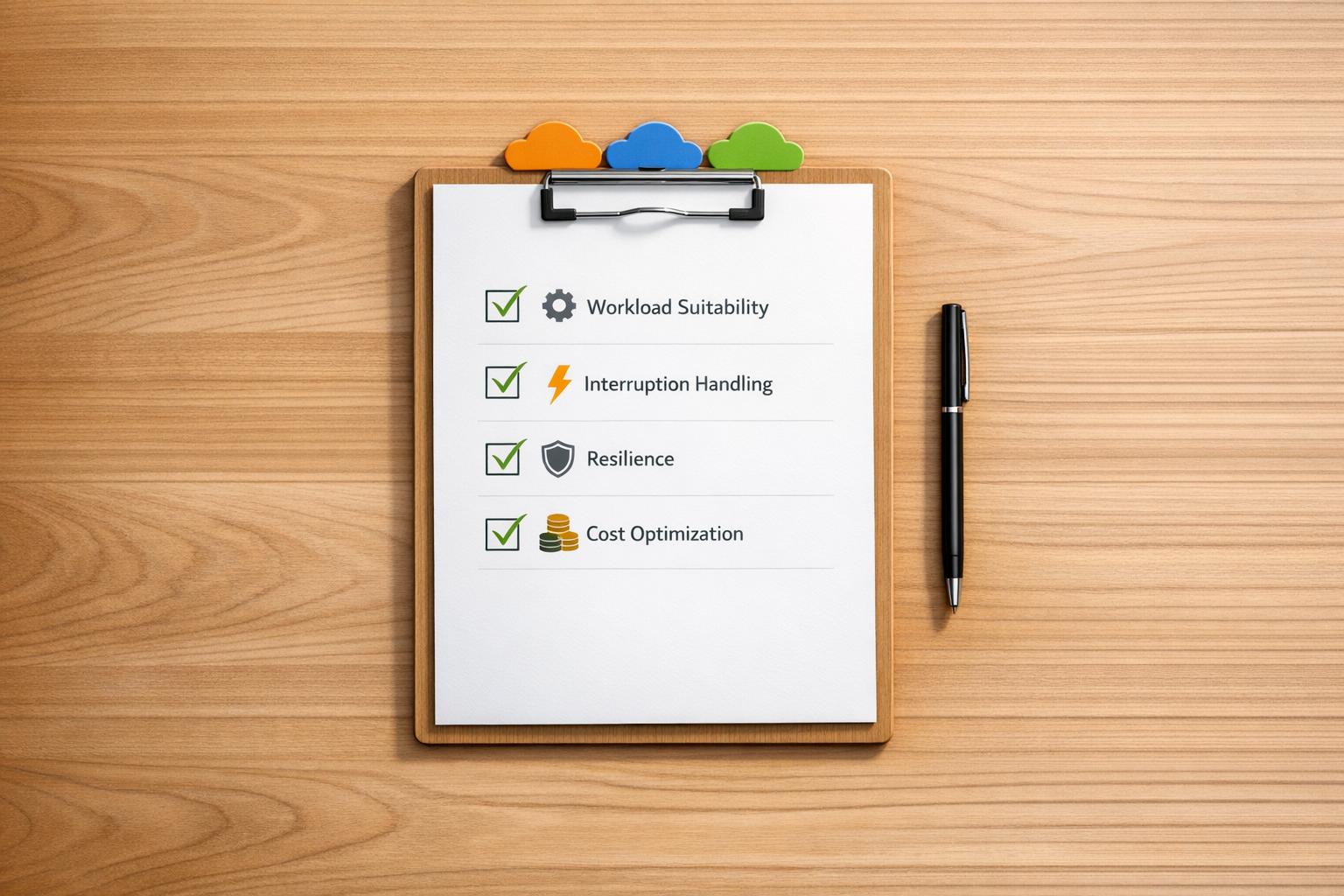
Checklist for running spot instances on AWS, Azure and GCP: workload suitability, interruption handling, resilience and cost optimisation.
Read more