Multi-Cluster Workflow Scheduling: Cost Impacts
How multi-cluster CI/CD affects costs: save with rightsizing, spot nodes and data-local placement, and measure in £ per workflow.
Read moreBlog posts in the Cloud Optimization category

How multi-cluster CI/CD affects costs: save with rightsizing, spot nodes and data-local placement, and measure in £ per workflow.
Read more
Lower cloud bills by treating clusters as one pool: better placement, rightsizing, autoscaling and policy controls.
Read more
Centralise billing, enforce same tags and owners, and match commitments to workloads to cut multi‑cloud waste and data egress costs.
Read more
Cut search costs and improve reliability: keep shard sizes 10–50 GB, match replicas to failure needs, tier old data and review sizing regularly.
Read more
Layered private‑cloud segmentation — VLAN/VRF, microsegmentation, security groups, SDN and compliance — to limit lateral movement and reduce audit scope.
Read more
Score workloads by cost, latency, data locality and compliance to place them on‑prem, private, public or edge, and review placement regularly.
Read more
Use user-focused SLIs, set SLO targets and manage error budgets to guide releases, scaling and cloud spend.
Read more
Only move to cloud if TCO, ROI and payback over 36–60 months support it; compare baseline, cloud costs and migration effort.
Read more
Speed up IaC by splitting state, isolating shared resources, standardising modules, queuing runs and enforcing policy checks.
Read more
Plan data first, pick the right migration pattern, validate cutover with checks, enforce a single source of truth and optimise cost.
Read more
SSO keeps sign‑ins internal; federation lets other organisations' IdPs authenticate users for external and multi‑cloud access.
Read more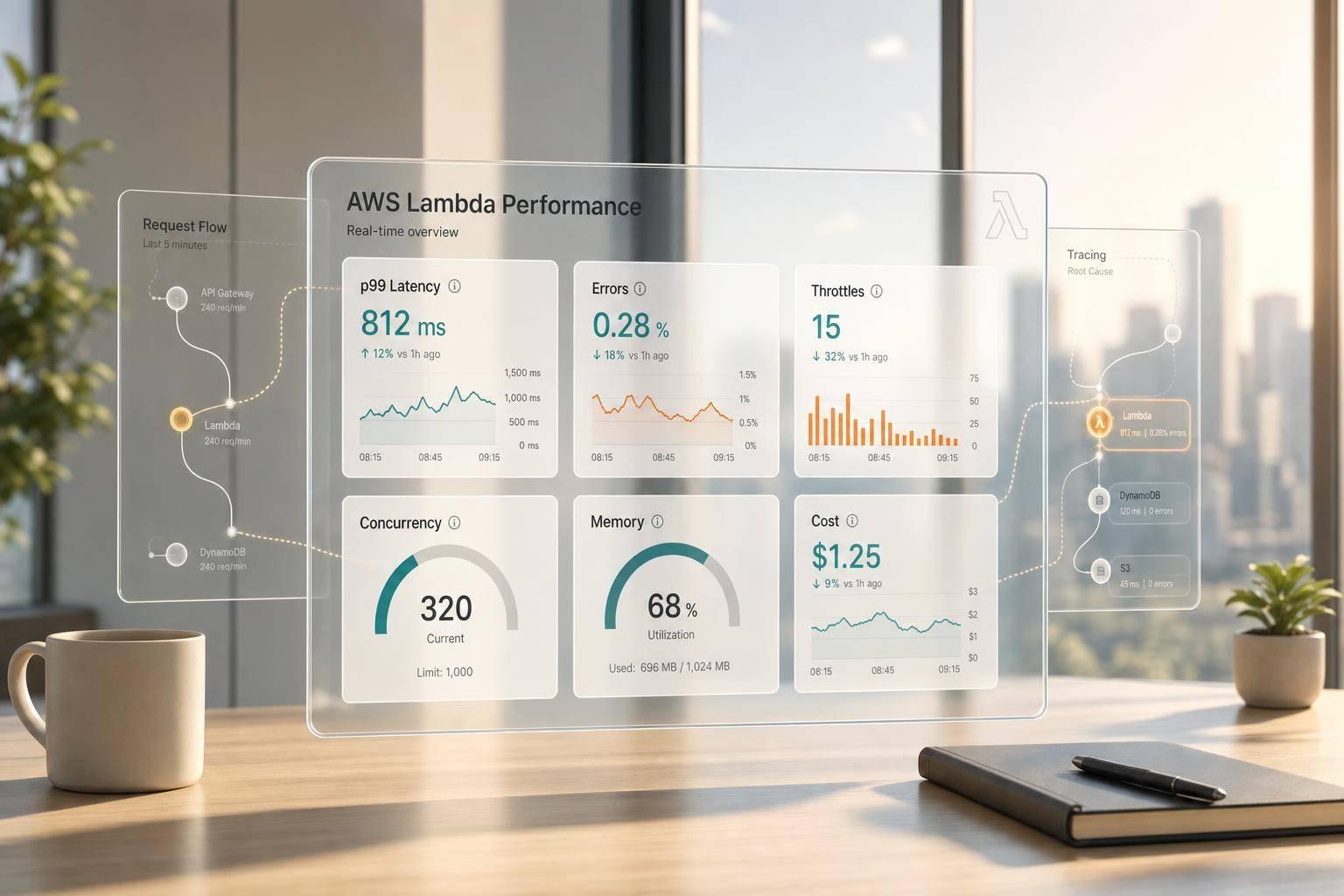
Prioritise p99 latency, errors, throttles, concurrency, memory and cost in CloudWatch; use X‑Ray for tracing and tune memory, timeout and concurrency.
Read more